Well People Center offers somatic psychotherapy, resilience-responsive consulting, reflective supervision, and TIC certification for individuals, practitioners, and organizations navigating the deep currents of personal and collective trauma.
"The body holds what words cannot yet reach. Healing begins when we learn to listen to sensation, not just story — and when that listening happens inside a relationship that can hold what surfaces."
"We do not only carry our own pain. We carry the unmetabolized grief of our families, communities, and histories. Recognizing this is not a burden — it is the beginning of a different kind of healing."
Coherence is not calm. It is the capacity of a nervous system — individual or collective — to hold experience without fragmenting. It is presence in the face of complexity. This is what our work moves toward.
Depth-oriented, body-based individual therapy for adults navigating trauma, grief, identity shifts, burnout, and the effects of collective and political stressors. Paced to your nervous system's readiness.
Organizational consulting that embeds trauma-informed principles into leadership, supervision, policy, and culture — moving organizations from training compliance to lived, sustainable practice.
Three structured certification pathways — from foundational trauma-informed designation to full ARC (Active Resilience Collective) culture transformation — tailored to organizational readiness and goals.
A dedicated supervisory space for practitioners in all modalities — somatic, relational, and depth-oriented. Individual sessions, group cohorts, and organizational supervision embedding. Holding the one who holds.
Coherence is among the most misunderstood concepts in trauma-informed work. It is frequently confused with calm, with resolution, with the absence of difficulty. It is none of these things.
Coherence is the organized, integrated, self-regulating capacity of a system — a person, a team, a community — to meet experience without fragmenting. It does not mean distress is absent. It means something can hold distress without being destroyed by it.
When trauma disrupts the nervous system, coherence is what breaks. When an organization collapses under cumulative stress, coherence is what was missing. Our work — in therapy, consulting, and supervision — is oriented toward the slow re-establishment of coherent ground.
Crucially, coherence is not achieved alone. It is co-regulated into being — through attuned relationships, consistent care, and the accumulated experience of being genuinely met.
A coherent nervous system moves fluidly between activation and settling. Breath is unrestricted. Sensation is tolerable. The body feels habitable again.
Two people in coherent contact can be affected by each other without losing themselves. Rupture can be named. Repair becomes possible.
A collective in coherence can acknowledge its history, tolerate disagreement, and act from something other than survival. This is what makes systems resilient — not merely functional.
Every session, every consultation, every supervision creates micro-conditions for coherence to return: safety, attunement, honest speech, regulated presence.
Collective trauma is not simply many people experiencing the same difficult event. It is a disruption that moves through shared nervous systems — through families, communities, generations, and institutions — altering what can be remembered, spoken, or imagined as possible.
It lives in silence, repetition, and fragmentation. In the bodies of caregivers who learned early that the world was not safe. In organizational cultures that replicate harm without awareness. In the political stressors, immigration crises, and grief that circulate through the communities we serve.
At Well People Center, we hold the understanding that individual and collective healing are not separate endeavors. What one body metabolizes, the field around it can carry. When a team develops capacity to sit with its own grief, something shifts in the system it serves.
Our therapy, consulting, and supervision work is always attentive to these layers — the personal and the communal, the body and the institution, the present wound and the historical one.
"Transformation does not begin at the edges. It begins at the core — and moves outward through relationship."— Lane Simmons, Well People Center
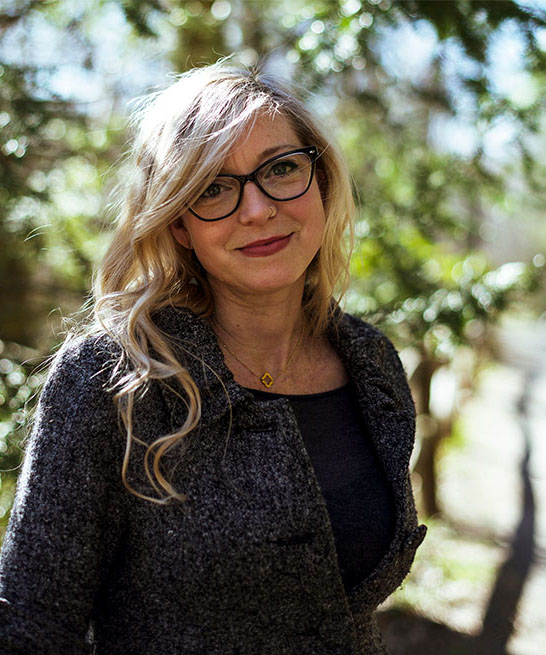
I am Lane Simmons — therapist, consultant, supervisor, and founder of Well People Center. My work lives at the intersection of systems and soul.
As a doctoral student in Somatic Psychology and Integrative Somatic Trauma Therapist, Lane brings embodied intelligence to every layer of work — from individual therapy to executive consulting. The body is not separate from the work. It is the work.
Having served as CEO, Director of Trauma-Informed Care Programming, and Lead Consultant across sectors, Lane brings deep executive experience in multi-phase implementation, workforce sustainability, and trust-centered organizational design.
Attunement to nervous systems. Attunement to power dynamics. Attunement to historical and collective stress. Attunement to what is not yet being spoken in the room. This is not soft skill. It is executive capacity.
For more than two decades, I have partnered with organizations, clinical teams, and individual leaders navigating growth, disruption, grief, and transformation. I have served as a CEO, Director of Trauma-Informed Care programming, practitioner engagement lead, clinical supervisor, and organizational consultant.
I have worked alongside healthcare providers navigating workforce fatigue, nonprofit leaders facing political and immigration-related stressors, and clinical teams managing cumulative grief and high-acuity environments.
My leadership integrates trust-centered systems design, reflective supervision as cultural infrastructure, restorative and resilience-based organizational practice, somatic psychology and nervous system literacy, and equity-informed, culturally humble implementation.
Sustainable change requires more than changes in policy. It happens through attunement.
Attunement to nervous systems.
Attunement to power dynamics.
Attunement to historical and collective stress.
Attunement to what is not yet being spoken in the room.
My background as a Licensed Marriage and Family Therapist, Certified Clinical Trauma Professional, Integrative Somatic Trauma Therapist, and doctoral student in Somatic Psychology informs every layer of my work.
Somatic awareness teaches us that transformation happens through integration, not force. A nervous system cannot be commanded into safety. A team cannot be mandated into cohesion. A culture cannot be rushed into belonging.
Safety emerges through attunement.
Belonging emerges through consistency.
Resilience emerges through collective repair.
This is the spiral at work — widening, strengthening, stabilizing.
I work with executives, supervisors, and clinical teams who sense that something deeper is required — beyond compliance checklists and performance metrics. They want sustainable systems. They want reflective leadership. They want cultures capable of metabolizing adversity without burning out their people.
If you are standing at a pivot point — navigating leadership turnover, workforce strain, growth transitions, or political stress — you do not need to solve it alone.
Whether you are an individual seeking therapy or an organization navigating transformation, I would be honored to accompany you.
Well People Therapy offers depth-oriented, body-based psychotherapy for individuals seeking meaningful healing and integration. This work is grounded in the understanding that healing unfolds through relationship, embodied awareness, and reflective insight.
Tracking sensations, breath, and nervous system responses to support regulation and processing.
Healing through connection, attunement, and the therapeutic relationship itself.
Prioritizing safety, pacing, and choice — always within your window of tolerance.
Exploring personal history, meaning, identity, and the patterns that shape the present.
This work is collaborative and paced carefully. The goal is not to force change — it is to support the integration of new insights and capacities, leading to real, sustainable transformation.
Therapy is not symptom management. It is the development of a different relationship with your own experience — one in which the body is no longer enemy, and the past is no longer the only story.
First sessions allow time for a deeper understanding of your history, nervous system, and goals. We do not rush this foundation.
Standard ongoing therapy sessions, paced to your process with room for depth and integration within each meeting.
Available when appropriate for deeper processing, somatic integration work, or particularly significant material.
Practitioners who work with trauma carry it. Without a consistent, attuned supervisory relationship, secondary traumatic stress quietly erodes clinical presence, ethical clarity, and the joy of the work itself.
Our reflective supervision draws on somatic awareness, attachment theory, and intersubjective practice. It is not simply a place to review cases — it is a space to restore the practitioner's own nervous system. To metabolize what has been absorbed. To re-find ground.
The practitioner's regulated presence is the most powerful clinical instrument available. Supervision is its care — not remedial, but essential.
"The most important thing a supervisor can offer is not insight, but a regulated nervous system — one that has metabolized difficulty and can sit beside a body still in the midst of it."
"When the supervisor is coherent, the supervisee can find their coherence. When the supervisee finds theirs, so — in time — can the client. Healing moves in relationship."
Free 20-minute consultation to explore fit. No commitment required.
Well People Center offers consulting for organizations navigating growth, disruption, and transformation. Our work supports the integration of trauma-informed principles into leadership, policy, supervision, and culture — moving from training to lived, sustainable practice.
We work through an evolving trauma-informed framework — one that moves beyond awareness training to build systems that actively generate resilience.
This means attending to relational trust as infrastructure, not aspiration — embedded in policy, supervision, onboarding, and the daily texture of organizational culture.
It means designing for workforce sustainability — understanding that burned-out practitioners cannot deliver trauma-informed care, regardless of training hours logged.
And it means engaging collective trauma directly — the cumulative grief, political stressors, immigration-related distress, and historical wounding that live inside the organizations we serve.
Moving organizations from policy to practice, from compliance to belonging
Relational intelligence as executive capacity, not soft skill
Embedding supervision as structural requirement, not add-on
CQI systems tied to relational outcomes, not just compliance metrics
Burnout prevention and well-being structures that actually hold
Most trauma-informed initiatives stall at the training level. Staff attend workshops, complete hours, receive certificates — and then return to a culture that has not changed. The structural conditions that generate harm remain intact.
Well People Center works differently. We embed alongside organizations across phases — attending to readiness, culture, power dynamics, supervisory structures, and the relational substrate that either supports or undermines every policy change.
Trust is treated as infrastructure. Reflective supervision is treated as leadership competency. Policy alignment is tied to lived practice, not documentation.
This reflects current grant language and real-world organizational needs — and it is also, simply, what we know works.
Staff who trust their supervisors can take risks, acknowledge difficulty, and grow. We build the structures that make trust possible and sustainable.
Diverse, high-stress teams need more than inclusion training. They need cultures capable of genuine encounter across difference — where all nervous systems can settle.
Retention improves when staff feel held. Burnout decreases when reflective supervision is structural, not aspirational. These outcomes are measurable.
An organization in coherence can metabolize adversity — political stress, leadership transition, funding change — without fragmenting. This is the long-term goal.
Organizations may pursue one of three aligned certification pathways depending on readiness, funding structure, and strategic goals. Each emphasizes evidence of implementation — not just completion of training hours.
Formal trauma-informed designation · Grant alignment · Structured CQI documentation
Grounded in the six core SAMHSA principles — Safety, Trustworthiness, Peer Support, Collaboration, Empowerment, and Cultural Humility — this pathway supports organizations seeking formal TIC designation, federal or state grant alignment, and cross-departmental culture integration.
This is certification emphasizing evidence of implementation, not just training hours. Policy, supervision, onboarding, and daily practice are all assessed and supported.
For organizations ready to evolve beyond trauma-only into proactive resilience design
This pathway reflects current grant language shifts toward resilience, health equity, and workforce stabilization. It emphasizes protective system design, workforce sustainability, relational trust-building, and cumulative grief integration.
Particularly relevant for organizations navigating immigration and political stress, high-acuity environments, or significant workforce fatigue.
Active Resilience Collective — Well People Center's original systems transformation model
Active — Ongoing reflective learning and leadership attunement
Resilience — Strength within and between people
Collective — Shared ownership of culture and accountability
ARC is ideal for organizations building internal training capacity, developing Community of Practice models, and investing in relational infrastructure as a long-term strategy. This is a certification of a culture shift.
Certification engagements are customized based on organizational size, readiness level, depth of implementation, and internal capacity. Sliding scale and phased options available for grant-funded and community-based organizations.
For organizations ready to formalize trauma-informed implementation. Includes readiness assessment, policy review, leadership sessions, and certification documentation.
Best for: small nonprofits, community programs, early-stage clinics, organizations under 40 staff.
Deep integration across departments for organizations seeking cross-departmental culture alignment and CQI development.
Best for: healthcare systems, multi-site organizations, school districts, behavioral health networks.
For organizations investing in long-term relational infrastructure and internal capacity building at scale.
Best for: large health systems, federally funded organizations, regional/statewide initiatives.
$1,200–$3,500/month depending on scope. Includes monthly leadership consultation, Community of Practice facilitation, policy review, and ongoing support. Additional hours at $300/hour.
If your organization is ready to move from awareness to embodiment, from training to trust, from compliance to culture shift — we are ready to walk beside you.
Transformation does not begin at the edges. It begins at the core — and moves outward through relationship.
Whether you are an individual seeking therapy, a practitioner exploring supervision, or an organization ready to begin the certification spiral — reach out. There is no commitment in an initial conversation. Only a first step.
"I offer a free 20-minute consultation to explore fit and answer questions. No commitment required — only curiosity."
— Lane Simmons
Fill out the form below and I will be in touch within two business days.
Well People Center brings together a team of practitioners, consultants, and facilitators whose work spans clinical psychology, social work, somatic practice, organizational development, and community advocacy. What unites us is a shared commitment to trauma-informed, resilience-responsive care — and the conviction that sustainable change is built through relationship.
Lane Simmons is a therapist, consultant, supervisor, and founder of Well People Center. Her work lives at the intersection of systems and soul — bringing more than two decades of experience as a CEO, Director of Trauma-Informed Care Programming, clinical supervisor, and organizational consultant to every engagement.
Her approach integrates somatic psychology, relational depth, and resilience-responsive systems design. She holds that sustainable transformation does not move in straight lines — it moves in spirals, widening through relationship, consistency, and the accumulated experience of being genuinely met.
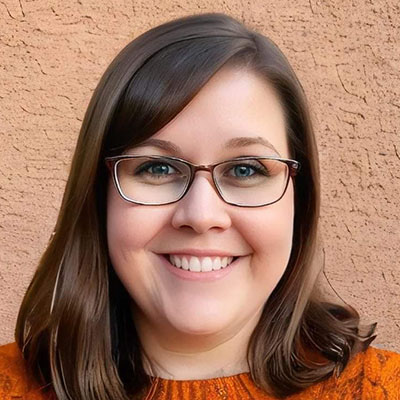
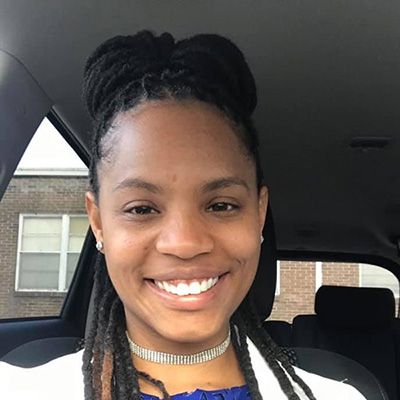
Taylore Davis is a Licensed Clinical Social Worker and organizational change leader with experience spanning nonprofit, government, and private sector settings. Her work connects frontline clinical expertise with systems-level strategy — supporting meaningful, sustainable change for both individuals and the organizations that serve them.
Taylore has led cross-functional initiatives in change management, workforce development, program implementation, community engagement, and behavioral health system coordination. A certified Adult Mental Health First Aid Instructor, she brings particular depth to resilience-oriented, person-centered organizational development.
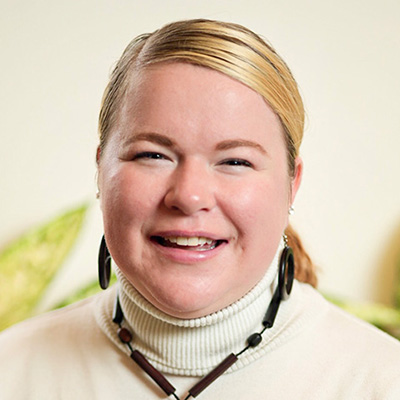
Bethany Monteiro is an educator, consultant, and organizational change leader whose work spans community trauma, trauma-informed care, restorative practices, social emotional learning, cultural humility, and diversity, equity, inclusion, and belonging. Over fifteen years she has designed and facilitated trainings and partnered with grassroots organizations, municipal school districts, correctional facilities, county hospitals, and government agencies — both domestically and internationally.
Her background includes three years as a Peace Corps Community Health Promoter in Mozambique. She holds a B.A. in Neuroscience from Earlham College and is currently completing her MSW at Case Western Reserve University.
Aline Rabalais is a licensed psychologist and researcher with more than thirty years of experience in the field of trauma. She holds a doctorate in clinical psychology with specializations in both treating and researching trauma-related reactions across individuals and communities — bringing rare depth to the intersection of clinical practice and organizational transformation.
Her work is guided by a biopsychosocial framework attending to trauma's impact across biological, individual, community, organizational, and societal levels. She has consulted with universities, hospitals, and community-based clinics, and was awarded a multi-year federal research grant in disaster mental health in partnership with the Red Cross.
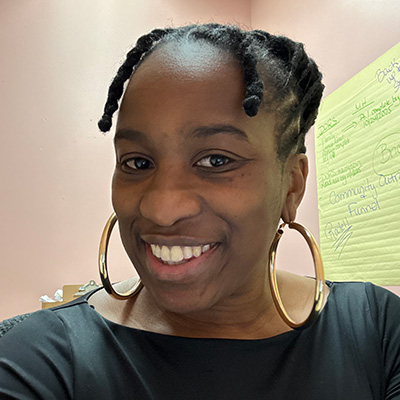
Shanon Williams-Hughes is a social worker, mediator, and founder of Self Care Housekeeping — a trauma-informed Spatial Health & Wellness intervention company. She is the creator of the Spatial Health & Wellness® framework, which explores the relationship between physical environments and mental, emotional, and relational well-being.
With more than fifteen years of experience spanning direct social work practice, community advocacy, conflict resolution, and human-centered training, Shanon works with individuals, families, and organizations to create spaces that support dignity, safety, regulation, and everyday functioning.
Shannon McFadden is a certified psychiatric rehabilitation practitioner and Child and Family Resiliency Practitioner whose work centers on the intersection of trauma and intellectual and developmental disabilities. A strong advocate for individuals living with developmental disabilities and autism, Shannon brings a resiliency-based framework to her consulting and facilitation — building communities, systems, and capacity one family at a time.
Her specialties include juvenile justice and special needs populations, race and intellectual disability, and resiliency-based care in IDD communities. She serves clients through the McFadden Educational Center, with locations in Baltimore, Maryland and Roseland, New Jersey.
Amy Day is a body-based practitioner whose work centers on the recovery and integration of stress and trauma — whether rooted in personal or professional relationships, physical injury, health experiences, or the cumulative weight of living within collective systems.
A Somatic Experiencing® Practitioner and Trauma Center–Trauma Sensitive Yoga Facilitator, Amy currently serves as an Assistant Teacher for Somatic Experiencing International's Beginning Level trainings. She brings particular depth to work with veterans, individuals with disabilities, and those navigating the impact of collective and systemic stress.
Whether you are seeking therapy, consultation, training, or certification — we are ready to accompany you.
Reflective supervision at Well People Center is not simply a space to review cases. It is a space to restore the practitioner's own nervous system — to metabolize what the work deposits, to re-find ground, and to return to practice with genuine presence.
"The practitioner's regulated nervous system is the most powerful clinical instrument available. Supervision is its maintenance — not as luxury, but as ethical necessity."
"When the supervisor is coherent, the supervisee can find their coherence. When the supervisee finds theirs, so — in time — can the client. Healing moves in relationship, not in isolation."
"Good supervision does not produce better techniques. It produces a better-regulated nervous system in the practitioner — one capable of genuine meeting."
Practitioners who work with trauma do not come away unchanged. The work deposits itself — in the body, in dreams, in the quality of attention we can bring to our own lives. Secondary traumatic stress, vicarious trauma, and moral injury are not personal failures. They are occupational realities in high-acuity environments.
Without a consistent, attuned supervisory relationship, this accumulation becomes erosion — of clinical presence, ethical clarity, relational capacity, and the deep satisfaction that drew practitioners to this work in the first place.
Reflective supervision as practiced at Well People Center is somatic, relational, and depth-oriented. It integrates body-based awareness, attachment theory, and intersubjective practice. It attends to parallel process — the ways the client's material is carried in the practitioner's body — and to the field dynamics that shape every clinical encounter.
This is supervision that holds the whole practitioner, not just their caseload.
We attend to what the body holds — countertransference that lives in the chest, the shoulders, the breath — and work with it as clinical information rather than something to manage away.
The dynamics between client and practitioner often re-emerge in the supervisory relationship. Recognizing and working with this parallel process deepens understanding and expands clinical range.
The supervisory relationship itself is a site of healing and modeling. Ruptures are named. Repair is practiced. The practitioner experiences what they are learning to offer.
Every session is held with the practitioner's regulation in mind. We create conditions for the nervous system to settle — so the practitioner leaves more resourced than they arrived.
A regulated, well-supported practitioner is an ethically clearer one. Supervision creates space to examine the ambiguous terrain of clinical practice without defensiveness or isolation.
Coherence — the organized, integrated capacity to hold experience without fragmenting — is not something that happens once in therapy and is then permanent. It is sustained through ongoing relational contact. For practitioners working in high-stress, high-acuity environments, supervision is one of the primary ways coherence is maintained across time.
A practitioner in coherence brings something distinct to their clients: regulated presence, genuine curiosity, and the capacity for contact without merger. They can be moved without being swept away. They can hold complexity without collapsing into certainty or avoidance.
At the organizational level, when supervisors are supported in their own coherence, something shifts in the systems they lead. Reflective supervision, embedded structurally, is one of the most powerful levers available for building coherent organizations.
This is why Lane integrates supervision both as a direct clinical service and as a core recommendation within organizational consulting and TIC certification work.
Regular supervision keeps the practitioner's nervous system resourced — neither chronically braced nor collapsed. From this ground, genuine therapeutic presence becomes sustainable, not heroic.
The quality of the supervisory relationship models what healing looks like — attunement, differentiation, rupture and repair, honest speech. Practitioners internalize this and carry it into their clinical work.
When reflective supervision is embedded structurally — not offered as an afterthought — teams develop shared capacity to metabolize the difficulty of the work. This is what moves organizations from burnout to sustainability.
Transformation does not move in straight lines. Each supervisory encounter adds a turn to the spiral — widening the practitioner's capacity, deepening their rootedness, extending what becomes possible in the room with clients.
One-to-one supervision for practitioners across modalities. Each session is paced to the practitioner's nervous system and current clinical context — not a checklist. Space to examine cases, carry countertransference, metabolize secondary trauma, and develop clinical range.
Ongoing monthly or bi-monthly engagement recommended for depth of integration.
A facilitated reflective space for small groups of practitioners (4–8 participants) working in related fields or organizations. Group supervision builds shared language, reduces professional isolation, and creates the relational conditions for collective regulation.
Available for established teams or as open cohort groups. Contact to inquire about current group availability.
For organizations seeking to embed reflective supervision as a structural practice — not a one-off training. Lane works with leadership to design supervision frameworks, train internal supervisors, and build Community of Practice models that sustain reflective culture over time.
Often integrated with TIC Certification and consulting engagements.
Practitioners working in high-impact environments — healthcare, social services, education, behavioral health — are not simply managing individual caseloads. They are working inside systems that are themselves affected by collective trauma: by political stress, immigration-related distress, cumulative organizational grief, and the historical wounds carried by the communities they serve.
This collective dimension is rarely named in conventional supervision. It circulates as unnamed weight — in the staff meeting that can't quite settle, in the team that responds to new leadership transitions with disproportionate anxiety, in the practitioner who can't explain why a particular case feels impossible.
Reflective supervision at Well People Center names the field. We bring collective trauma into the supervisory room — not as abstract theory, but as lived, embodied context for the work. This expands practitioners' capacity to understand their responses, protect against burnout, and hold clients with greater depth and equanimity.
This is supervision that understands personal stress and collective wounding are not separate domains. It holds both.
"We do not only carry our clients' pain. We carry the unmetabolized grief of the organizations we work within, the communities we serve, and the collective stressors that circulate through every room we enter. Supervision that ignores this is incomplete."— Lane Simmons, Well People Center
Reflective supervision is not only for those in crisis or difficulty. It is for any practitioner who wants to sustain the quality and depth of their presence over the long arc of a career. It is preventive, developmental, and generative — not remedial.
Lane brings particular depth to supervision for practitioners working at the intersection of trauma, systems, and somatic practice — and for those holding leadership or organizational roles alongside direct clinical work.
Supervision is available for practitioners registered with BACP, UKCP, HCPC, NMC, NASW, AAMFT, and related professional bodies. Lane's grounding in somatic psychology, trauma-informed care, and executive systems leadership informs a supervisory approach that is genuinely integrative.
Supervision is an investment in the practitioner's sustainability, clinical depth, and ethical integrity. Well People Center offers a sliding scale for community-based practitioners and grant-funded organizations.
50–60 minute sessions. Monthly or bi-monthly engagement recommended. Free 20-minute consultation to explore fit before committing.
90-minute facilitated sessions for 4–8 practitioners. Team and open-cohort formats available. Rates vary by group size and frequency.
Integrated within consulting and TIC certification engagements. Includes framework design, internal supervisor training, and Community of Practice facilitation.
Well People Center works collaboratively with community-based organizations, grant-funded programs, and practitioners in underserved areas. Reach out to discuss.
Whether you are seeking individual supervision, a group cohort, or organizational supervision embedding — begin with a free 20-minute conversation. No commitment required.